
The Church as a refuge for victims of forced labour
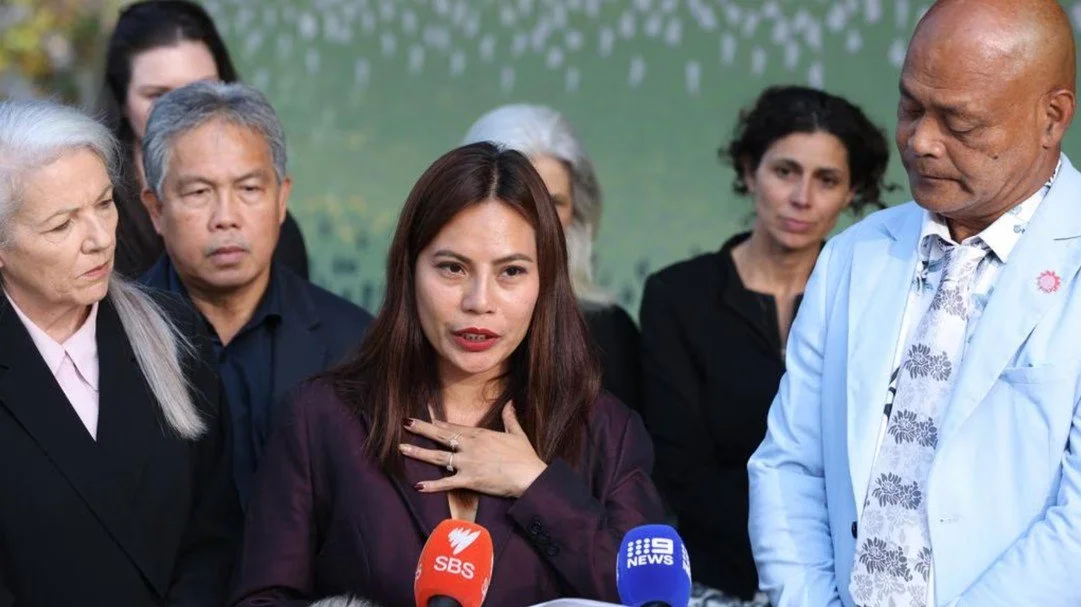
Jessa Royupa with ACAN staff and supporters speaking to media outside the NSW Coroners Court
As Catholics around the world celebrate the patron saint of victims of modern slavery, the grieving sister of a migrant worker has appealed to the Australian Church to be a “place of refuge.”
Ahead of the Feast Day of St Josephine Bakhita on 8 February, Jessa Royupa has spoken about the importance of Church communities in keeping vulnerable workers safe.
In an interview with Domus 8.7, the Catholic remediation service that has supported her family, Jessa said:
“The Church is, and should be, the refuge of people who are in that situation (forced labour).”
Jessa is a Filipino lawyer who fought for seven years for her brother Jerwin’s death to be properly investigated in NSW.
On 16 January, in a landmark decision, the NSW Coroner found that Jerwin was exploited in the lead-up to his tragic death. The coronial inquest’s findings have been referred to the Australian Federal Police for further investigations.
While he was being exploited on a remote country property in NSW, Jerwin met an Australian of Filipino background at the local Catholic church.
“When he went to church, Jerwin just had a flicker of hope - that I'm not alone here,” Jessa Royupa explained. “He was very happy. He felt relieved, somehow from his situation.”
While the people Jerwin met at the local Catholic Church tried their best to help him, Jerwin was unable to leave his situation before his untimely death.
The NSW Coroner found that the government supports available to Jerwin as a temporary migrant worker were “inaccessible, inadequate and insufficient,” and recommended that the Minister for Home Affairs conduct an internal review into the lessons learned from the inquest.
Domus 8.7 Lived Experience Lead Moe Turaga has urged church communities to take care of migrant workers in their midst.
“Every Church meeting is a potential lifeline for a person trapped in forced labour.”
“Knowing what to do when you encounter vulnerable people is crucial.
“In my own case, many years ago, I escaped the people who had deceived me after meeting a kind couple at church,” Mr Turaga said.
“It is a tragedy that Jerwin could not get the life-saving help he needed.
“In the spirit of St Josephine Bakhita, I would ask Catholic congregations, particularly those in rural and regional areas, to work through your dioceses with Domus 8.7, and be ready to refer people who are being mistreated and abused for help.”
Every year on 8 February, Catholics honour St Josephine Bakhita.
Born in Sudan in the late 1800s, Bakhita was kidnapped as a child and sold into slavery. Her captors called her Bakhita, meaning “fortunate”. Her early years were marked by violence and humiliation. Bakhita's life changed when she was brought to Italy and eventually placed in the care of the Canossian Sisters where she found safety, compassion, and faith.
For more than 50 years, she lived a life of quiet service welcoming strangers, offering comfort, and radiating hope. Today, her legacy inspires a global movement.
The Feast of St Josephine Bakhita is recognised as a day of prayer, reflection and action against human trafficking and modern slavery. Across Australia and the world, faith communities, advocates and survivors come together and renew their commitment to human dignity.